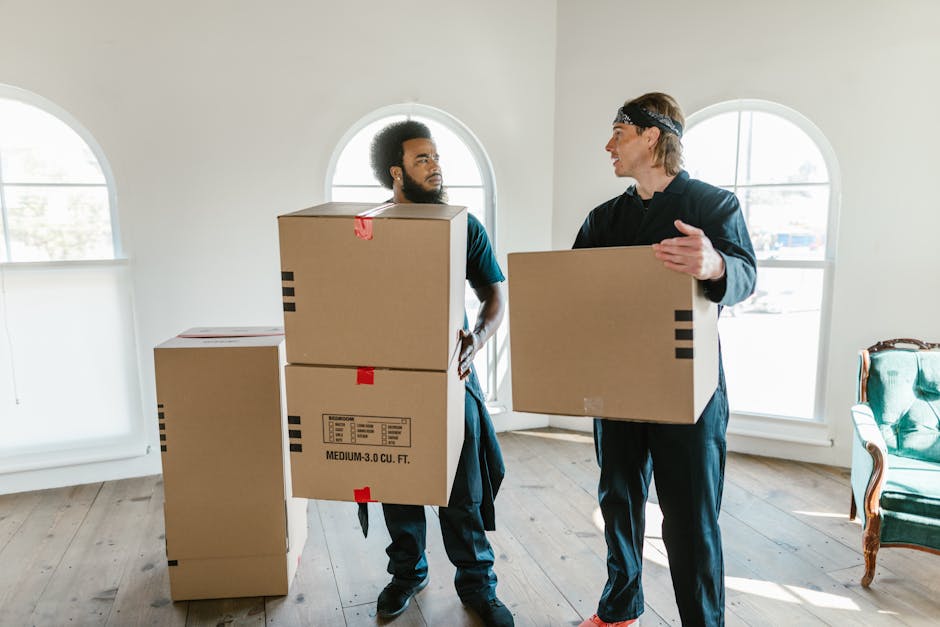
Commercial removals case study office relocation Lisson Grove
Office moves can look straightforward from the outside. A few desks, a couple of IT boxes, maybe a meeting room or two. In reality, a commercial relocation is one of those jobs where timing, access, coordination, and nerves all matter at once. This Commercial removals case study office relocation Lisson Grove article breaks the process down in a way that is useful whether you are planning a small local move or trying to keep a busy team working with as little disruption as possible.
Lisson Grove has its own quirks: tight streets, mixed-use buildings, busy road patterns, and the usual London pressures around parking and access. That means the "how" matters just as much as the "what". Below, you will find a practical guide to what commercial removals involve, how office relocation work is usually planned, where the risks hide, and what good preparation actually looks like on the day. No fluff. Just the stuff that helps.
Table of Contents
- Why Commercial removals case study office relocation Lisson Grove Matters
- How Commercial removals case study office relocation Lisson Grove Works
- Key Benefits and Practical Advantages
- Who This Is For and When It Makes Sense
- Step-by-Step Guidance
- Expert Tips for Better Results
- Common Mistakes to Avoid
- Tools, Resources and Recommendations
- Law, Compliance, Standards, or Best Practice
- Options, Methods, or Comparison Table
- Case Study or Real-World Example
- Practical Checklist
- Conclusion
- Frequently Asked Questions
Why Commercial removals case study office relocation Lisson Grove Matters
Office relocation is not just a physical move. It affects operations, people, equipment, deadlines, and sometimes customer service too. In a place like Lisson Grove, the local logistics can make a simple move feel much bigger than the floor plan suggests. A lift that is too small, a staircase with awkward turns, a loading bay that is not available when you need it, and suddenly the whole schedule starts sliding.
That is why a commercial removals case study is useful. It shows what a real office move looks like in practice, not just in theory. It highlights the decisions that make the move smoother, the timing issues that cause stress, and the small details that can save hours on the day. Let's face it, nobody wants staff standing around with laptops while someone tries to figure out where the van can legally stop.
For local businesses, the stakes are often higher than they first appear. A well-run move can protect productivity and help people settle quickly. A poorly planned one can create broken routines, missed calls, missing kit, and a very long Monday. That is not dramatic. It is just how office moves tend to go when the plan is thin.
There is also a trust factor. A commercial move involves items that are sensitive, valuable, or simply annoying to replace: monitors, printers, filing systems, servers, chairs, branded equipment, and all the little office bits that somehow matter more than expected. A professional move process is built to keep those items organised and accounted for from start to finish.
How Commercial removals case study office relocation Lisson Grove Works
Every office relocation is slightly different, but the core process is usually the same. It begins with understanding the space you are leaving, the space you are moving into, and how much downtime you can actually tolerate. That last point is often the one people underestimate. If your team needs to work through the move, the plan has to support that. If the office can be closed for a day, the schedule can be simpler. Different moves, different shape.
In a typical Lisson Grove office move, the work starts with a survey or planning discussion. This helps identify access points, parking issues, the number of floors involved, furniture volume, fragile equipment, and any special handling requirements. A small office with ten workstations is not the same as a multi-room professional space with archives and secure IT equipment.
Then comes the packing and staging phase. Items are sorted, labelled, wrapped, boxed, and grouped by destination. Good labelling saves a surprising amount of time later. The difference between "meeting room 2" and "miscellaneous box of cables" is, frankly, the difference between a calm unpack and a noisy one.
On moving day itself, a crew will usually handle loading, transit, unloading, and placement. In some cases, the team may also provide office relocation services that include dismantling desks, reassembly, and room-by-room positioning. If the move is larger or includes business assets that need more careful handling, a broader commercial moves approach may be more suitable than a basic point-to-point removal.
After delivery, the final stage is placement and basic setup. That might involve positioning desks, putting archive boxes in the right zones, and making sure the most important operational items are available first. It sounds minor until someone needs a printer cable or a phone charger five minutes before a client call. Then it becomes very important indeed.
Key Benefits and Practical Advantages
A well-managed commercial move is not only about transport. The real value is in continuity. Businesses do not just want their items moved from A to B. They want the move to be predictable, controlled, and as close to interruption-free as possible.
Here are the main advantages people usually notice:
- Reduced downtime: careful planning means staff can get back to work faster.
- Lower risk of damage: professional packing and handling protect furniture, screens, and equipment.
- Better organisation: labelled boxes and planned placement save time during unpacking.
- Less stress for staff: people know what to do, where things go, and what happens next.
- Improved access management: local knowledge matters in tight London streets and mixed-access buildings.
- More predictable costs: a clear scope reduces surprise add-ons.
One benefit that often gets overlooked is confidence. If your team sees a move handled cleanly, they settle faster in the new office. They stop worrying about whether their equipment has vanished into a random box. That sounds small, but morale can turn on tiny things during a relocation.
If you want support with the packing side of the move, services such as packing and unpacking services can take pressure off your internal team. In many office moves, that is where the biggest time saving appears. Not in the truck. In the prep.
Who This Is For and When It Makes Sense
This kind of move is relevant for more businesses than people expect. It is not just for large corporate offices. Smaller firms, creative studios, consultancies, dental practices, legal offices, managed workspaces, and startups all face similar relocation headaches, just on different scales.
It makes sense to plan a structured office relocation when:
- your current space is too small, too expensive, or no longer practical
- you are consolidating two offices into one
- your lease is ending and you need to move quickly
- you are upgrading to a better location or layout
- you need a local move with minimal business interruption
- your office has specialist items that cannot be moved casually
It also makes sense when access is tricky. In Lisson Grove, that can mean narrow roads, awkward loading, or buildings where the front entrance is not exactly "removal-friendly". If you know the move involves stairs, a tight entrance, or split access points, planning early will save time and probably a few headaches too.
For businesses moving less furniture but still needing flexible support, options like man and van or removal services may be enough. For heavier or more complex office layouts, a fuller office removals setup is usually the safer choice.
Step-by-Step Guidance
Below is a practical route through the move. Not every business will need every step, but this sequence works well for most office relocations in and around Lisson Grove.
- Assess the move properly. Count desks, chairs, cabinets, devices, archive boxes, and anything unusual. Do not guess. A quick room-by-room note is better than a vague estimate scribbled on a Friday afternoon.
- Decide what is moving and what is not. Office moves are a good time to clear broken furniture, duplicate items, and old paperwork. If you can reduce volume before moving day, do it.
- Plan access at both properties. Check entry times, lift size, stair width, parking, and any building rules. If the new office has a loading restriction, you need to know early, not on the morning of the move.
- Choose the right packing method. Fragile items, IT equipment, and files should be packed separately and clearly labelled. Mixed boxes slow everything down later.
- Schedule the move around business needs. Some companies move in stages. Others prefer a single-day closure. There is no perfect model, only the one that fits your operations.
- Prepare staff. People should know what they pack, what the moving team handles, and when they need to be back online. A short internal memo can prevent a lot of confusion.
- Move in priority order. Critical equipment first, then main workstations, then storage and non-urgent items. This gets the business functional sooner.
- Check everything at the end. Walk the old office and the new one. Look for forgotten items, open drawers, cable bundles, and anything that was left behind in the rush.
If the office contains large or awkward items, it can be worth using a vehicle and crew suited to the load. A dedicated moving truck or removal truck hire arrangement may be more efficient than trying to improvise with a smaller vehicle. Truth be told, trying to save a bit on vehicle size sometimes costs more in time.
A small note that many teams appreciate: keep one "first day" box per department. Chargers, extension leads, pens, wipes, basic stationery, keys, a kettle if you really want morale to survive. It sounds trivial. It is not.
Expert Tips for Better Results
Experience teaches you where the friction lives. The move itself is often the easy bit. The friction is in the gaps between planning, packing, and setup. Here are the tips that usually make the biggest difference.
- Label by destination, not just by contents. "Accounts - new office, room 2" is far more useful than "files".
- Photograph cable setups before dismantling. It saves time during reassembly, especially around monitors and shared printers.
- Keep critical items separate. Important documents, login devices, and urgent equipment should not disappear into a general box pile.
- Build in a buffer. If you think the move will take four hours, plan for five. If it only takes four, great. If not, you are not scrambling.
- Think about the first working hour. What must be live first: phones, Wi-Fi, finance systems, reception? Set that order before the move begins.
- Use storage if needed. If the new space is not ready for everything at once, temporary storage can prevent clutter and confusion.
One of the strongest practical options, especially when timing is awkward, is to split the move into phases. For example, non-essential stock, archived files, and spare furniture can move earlier, while live workstations move last. It is not glamorous, but it works. You will notice the difference on day one.
For businesses that want to reduce waste while relocating, the recycling and sustainability approach can help you separate unwanted furniture and packaging in a more responsible way. That tends to be better for both the move and the office clear-out.
Common Mistakes to Avoid
Office moves do not usually fail because of one huge disaster. They fail because of lots of small ones. That is the annoying part. Here are the mistakes that come up again and again.
- Underestimating volume: people forget drawers, cupboards, cables, and storage boxes.
- Poor labelling: every unlabelled box creates delay later.
- Ignoring access issues: no parking plan usually means a slower, messier move.
- Not assigning responsibilities: if everyone owns the move, nobody does.
- Leaving IT until the end: technology should be planned, not treated as an afterthought.
- Failing to brief staff: confusion at the office level quickly becomes confusion at the truck level.
- Skipping insurance checks: you want to understand cover before anything is loaded, not after.
There is also a classic one: people keep working right up to the move and only start packing after the urgency has become physical. Boxes everywhere, half a printer disconnected, someone asking where the toner went. It is never a fun scene, and somehow there is always tape missing.
A better approach is simple: pack early, label clearly, and decide what matters most. That alone removes a lot of avoidable stress.
Tools, Resources and Recommendations
You do not need a mountain of equipment to manage an office move well, but a few things make life much easier. Most of them are ordinary, which is often the point.
| Tool or Resource | Why It Helps | Best Used For |
|---|---|---|
| Label printer or strong markers | Creates clear destination labels for boxes and furniture | Fast sorting and room placement |
| Coloured tape or stickers | Helps teams identify departments or zones at a glance | Multi-floor or multi-team relocations |
| Inventory sheet | Tracks what is moving, what is stored, and what is discarded | Office audits and accountability |
| IT packing materials | Protects screens, peripherals, and sensitive equipment | Tech-heavy offices |
| Temporary storage option | Keeps non-essential items out of the way during staged moves | Phased relocations and renovations |
For business clients that need wider support beyond transport alone, the combination of office removals, packing and boxes, and storage can be a very practical setup. It gives you room to manage the move in stages rather than forcing everything into one chaotic afternoon.
If you are comparing providers, a page like pricing and quotes is useful because it reminds you to check what is included, not just what the headline price is. That matters more than people think. Hidden extras can turn a "cheap" move into an expensive one fast.
Law, Compliance, Standards, or Best Practice
Commercial removals involve practical safety responsibilities. You do not need to turn the move into a legal seminar, but you do need to be sensible. In the UK, businesses have duties around health and safety, risk reduction, safe handling, and making sure people are not put at unnecessary risk during the move. The exact requirements depend on the workplace and the nature of the items being moved.
Best practice usually includes risk assessment, safe lifting methods, clear walkways, and proper handling of heavy or awkward items. If your office includes specialist equipment, confidential records, or fragile IT systems, that planning becomes even more important. It is also sensible to check whether the removal company has suitable insurance and follows a documented safety approach.
For many clients, the reassurance comes from knowing the mover has an insurance and safety approach in place and a visible health and safety policy. That is not just paperwork for the drawer. It shows the job is being handled in a structured, responsible way.
You should also consider building rules, access permissions, and building management instructions at both sites. Some offices require advance notice for lift use or loading access. Some require sign-in processes. Some have strict time windows. Nothing exotic, just the normal details that can catch people out if they are not checked early.
If you are unsure about waste handling during the clear-out phase, especially for old office furniture or packaging, it is worth planning disposal carefully. The aim is to move the business, not create an accidental pile of clutter that has nowhere to go.
Options, Methods, or Comparison Table
Not every office move needs the same approach. The best option depends on size, urgency, and how much support you want the movers to provide. Here is a straightforward comparison to help with decision-making.
| Move Method | Best For | Strengths | Trade-offs |
|---|---|---|---|
| Basic transport-only move | Small offices with packed items ready to go | Simple, efficient, usually lower cost | More internal work needed before and after |
| Full office relocation service | Businesses that want hands-on support | Less disruption, better coordination, easier setup | Typically more planning and a broader service scope |
| Phased relocation | Teams that must keep operating during the move | Reduces downtime and spreads risk | Requires more scheduling discipline |
| Storage-assisted move | Offices waiting on fit-out or layout changes | Flexible, less cluttered, useful for staged delivery | Extra coordination and longer timelines |
There is no single "best" method. There is only the best method for your building, your timeline, and your team. That is the honest answer. Anyone promising one perfect formula for every office move is probably skipping the hard bits.
Case Study or Real-World Example
Here is a realistic example of how a Lisson Grove office relocation might unfold. It is not a dramatic story. That is the point. Good moves tend to look uneventful from the outside.
A small professional services team was moving from a compact office near Lisson Grove into a nearby space with a better layout and a slightly larger meeting room. The team had shared desks, several filing units, IT equipment, boxed client records, and a few items of furniture that were worth keeping. The biggest concern was interruption: they needed to be back up quickly because client work could not stop for long.
The move was planned in stages. First, non-essential items were sorted, labelled, and packed. Old files that were no longer needed were separated from active records. A few spare pieces of furniture were removed from the relocation list entirely. That kind of decluttering saves time and space, and to be fair, nobody misses a broken chair with one dodgy wheel.
On the move day, the priority items were loaded first: IT gear, workstations, and the most used office supplies. The destination office had a clear placement plan, so desks and boxes were set into the correct rooms straight away. The team used labels by department and room, which made unpacking far easier.
The result was a calmer first day in the new office. Staff could locate their essentials, the admin team knew where the archive boxes were, and the business avoided the kind of slow, messy restart that often happens when a move is treated as "just transport". The success came from preparation, not luck. That is usually how it works.
In a nearby move with heavier equipment, the company also arranged furniture removals for bulky desks and storage cabinets they did not want to dismantle themselves. That kind of support can be a real time-saver when office furniture is awkward or heavy.
Practical Checklist
Use this checklist as a final pre-move sanity check. It is simple, but it catches a lot of the usual problems.
- Confirmed move date and access times
- Checked parking, lift access, and building rules at both sites
- Completed an inventory of desks, chairs, equipment, and files
- Decided what will be moved, stored, recycled, or discarded
- Labelled boxes by department and destination room
- Separated critical IT and admin items for first-day access
- Briefed staff on what to pack and what to leave for movers
- Confirmed insurance and safety arrangements
- Prepared a first-day essentials box for each key team area
- Walked through both offices after the move to check for leftovers
Quick expert summary: the smoothest office relocations are usually the ones that look a little boring on paper. Clear labels, early planning, realistic access checks, and the right support for heavy or sensitive items. Not exciting, perhaps. But very effective.
Get a free quote today and see how much you can save.
Conclusion
A well-run commercial move in Lisson Grove is less about brute force and more about coordination. The best outcomes usually come from clear planning, sensible packing, a realistic schedule, and a mover who understands the practical side of local access. Once those pieces are in place, the relocation becomes much easier to manage.
If you are weighing up an office move, think beyond the truck. Think about staff time, first-day readiness, equipment safety, parking, room layouts, and how quickly the business needs to be operational again. That is where the real value lives.
And honestly, a calm move is a good move. Simple as that. When the boxes are in the right rooms and the phones start ringing again, you can finally take that first proper breath.
Frequently Asked Questions
What is included in a commercial office removal in Lisson Grove?
It usually includes planning, packing support if needed, loading, transport, unloading, and placement at the new office. Some moves also include dismantling, reassembly, and storage for items that are not going straight across.
How far in advance should I book an office relocation?
As early as you reasonably can. Smaller moves may be arranged more quickly, but good planning time gives you more choice, better access coordination, and fewer last-minute surprises. If the move is complex, more lead time is always helpful.
Is a commercial removals case study useful for small businesses too?
Yes. Small offices often benefit even more because they may not have much spare time or admin capacity. A practical case study shows what to prioritise, what to delegate, and how to avoid unnecessary downtime.
What makes office relocation in Lisson Grove different from other areas?
Local access is often the main issue. Narrow roads, parking restrictions, shared entrances, and busy surrounding streets can all affect timing. That is why local knowledge matters more than people expect.
Can my staff pack everything themselves?
They can, but it is often more efficient to split the task. Staff usually handle personal items and desk contents, while movers handle larger furniture, heavier items, and careful transport. That balance often works best.
How do I reduce downtime during a business move?
Prioritise critical equipment, stage the move if needed, label boxes clearly, and prepare the new office layout in advance. If phones, internet, and key workstations are ready first, the team can get back to work sooner.
What should I do with old office furniture I do not want to move?
Decide early whether it will be reused, donated, recycled, stored, or removed. Leaving this decision until the last minute usually creates clutter and delays. A planned clear-out keeps the relocation cleaner and simpler.
Do office removals services help with IT equipment?
They often do, but the level of support varies. Sensitive or fragile equipment should be discussed in advance so the right packing and handling approach is used. Photographs of setups and clear labelling help a lot here.
How can I compare office removal quotes properly?
Look beyond the headline price. Check what is included, whether packing is covered, how access issues are handled, and whether insurance and safety arrangements are clear. A cheaper quote can be less valuable if it leaves out the important parts.
What is the biggest mistake businesses make during a move?
Underplanning. Most problems come from poor timing, vague labelling, and unclear responsibility rather than from the move itself. Once the basics are mapped out, the process becomes much easier.
Should I use storage during an office relocation?
If the new office is not ready for everything at once, yes, storage can be very useful. It allows you to move in stages and avoid crowding the new space with items you do not need immediately.
How do I know if I need a full office removals service or just transport?
If your office has minimal furniture, simple access, and everything is already packed, transport-only may be enough. If you need help with packing, disassembly, placement, or coordination, a fuller service is usually the better fit.